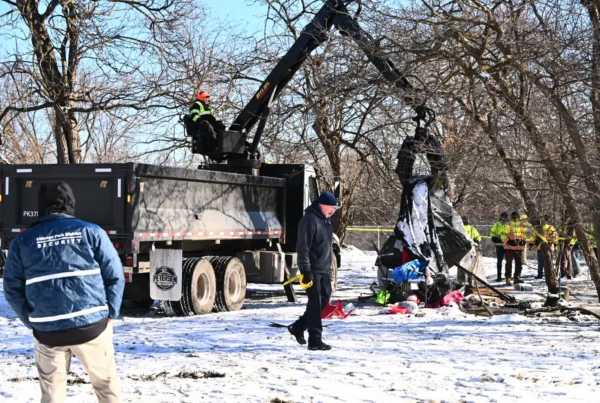

Public encampments provide resources and community for people experiencing homelessness, but city crews repeatedly evict residents and leave them with nowhere else to go.
by
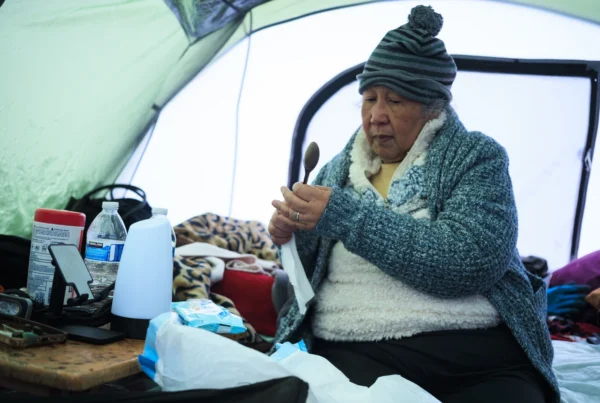
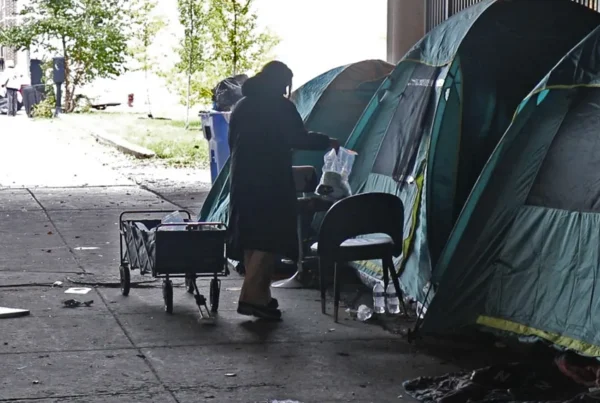
Jay and John are two unhoused Chicagoans who live in an encampment under the Sacramento Avenue viaduct just south of Chicago Avenue in Garfield Park. The men, both middle-aged, said they’ve survived years of homelessness in the city by learning to rely on and be there for others. To them, this encampment, like others across the city, is more than a spot outdoors where one or more unhoused people live. It’s a community where people share resources that save each other’s lives: tents and blankets, clothes and food, phones and the opioid overdose reversal drug Narcan. In an encampment, people split car rides to the emergency room and watch each other’s pets.
Encampments are “camaraderie,” said Jay. “You obviously want to stay more with people that you know versus people that you don’t.” He pointed to his friend John. “Now that he’s staying here, I trust him.”
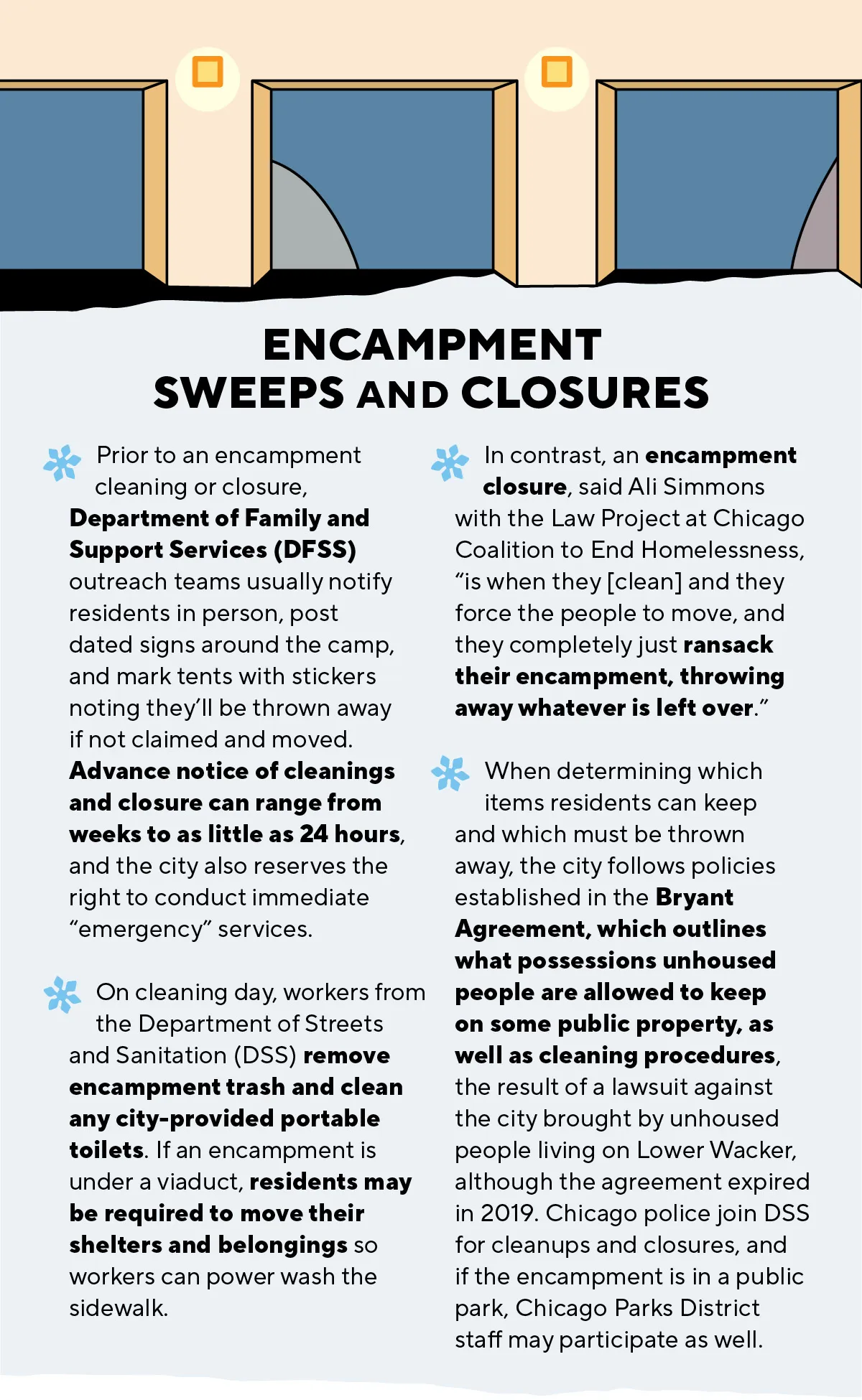
Credit: Shira Friedman-Parks
From the Article:
“It serves no purpose,” Ali Simmons, senior case and street outreach worker at the Law Project at Chicago Coalition to End Homelessness said of the evictions. “You close one encampment, you offer no housing. You interrupt services being provided to people.” Outreach workers help unhoused people get copies of their vital records, which are required to obtain housing and jobs. Many residents don’t have phones or regular schedules, so in-person contact is essential to help people move forward in their lives. “When encampments are closed, and we lose contact with the person, we are sitting there with their information and have no way of getting it to them,” Simmons said.