
The bill, touted by experts and leaders as the most significant housing legislation passed in decades, includes more than 40 measures that are meant to boost the country’s housing supply through incentives, grants and reduced regulations.
Developers in the Chicago area are optimistic about a new sweeping federal law that aims to increase housing supply and affordability, but advocates say the legislation doesn’t address the most pressing needs — that of low-income renters.
The 21st Century ROAD to Housing Act became law Saturday, after President Donald Trump refused to sign the bill despite overwhelming bipartisan support. The bill, touted by experts and leaders as the most significant housing legislation passed in decades, includes more than 40 measures that are meant to boost the country’s housing supply through incentives, grants and reduced regulations.

From the Article:
While the housing industry feels hopeful about the law, some say more needs to be done to address the housing shortage for low-income renters.
According to a report by Housing Action Illinois and the National Low Income Housing Coalition, there are about 34 per 100 affordable and available rental homes for the state’s lowest-income households, families with annual incomes at or below 30% of the area median income.
“Illinois’ most severe housing needs are [those of] renters with the lowest incomes and people experiencing homelessness, and we really need more direct federal investment right now,” Bob Palmer, Housing Action Illinois’s policy director, said.
From the Article:
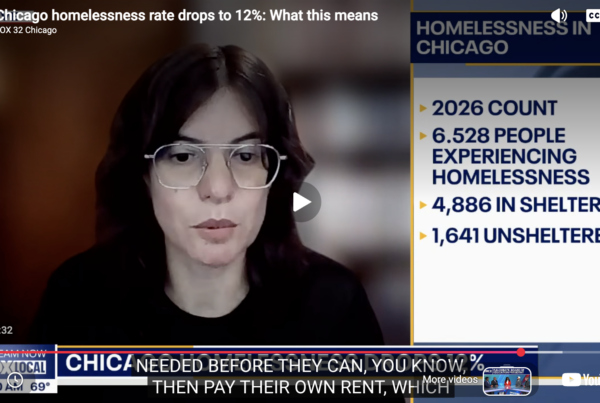
Doug Schenkelberg, executive director of the Chicago Coalition to End Homelessness, said he hopes the downstream effects of making housing more accessible and affordable for middle-class families will impact people without housing.
“A large percentage of folks experiencing homelessness are working and have income. They simply can’t afford housing,” Schenkelberg said. “So anything that makes the housing market more accessible overall increases supply overall.”
He added that the provisions in the 21st Century ROAD to Housing Act that specifically address homelessness are aimed at loosening restrictions and making it easier for people to qualify for services and vouchers. However, “unless they put more funding to those vouchers and create new vouchers, the fact that more people are eligible doesn’t necessarily mean that more people are getting housed,” Schenkelberg said.