

Since Mundelein’s anti-camping ban was enacted in October 2024, the ordinance has been repeatedly used to target an individual experiencing street homelessness in the community. Instead of providing viable options for housing or services, repeated citations have created a pattern of displacement, forcing them to move from place to place with their belongings, only to face additional fines and citations for attempting to shelter elsewhere. By only offering shelter options almost a half hour drive away in Waukegan, police have made it clear that there is effectively nowhere in Mundelein where this person can legally exist without violating the ordinance. Enforcement actions like these do nothing to resolve homelessness but push people out of sight and into neighboring communities, deepening instability instead of addressing root causes.
Examples of Anti-Camping Enforcement
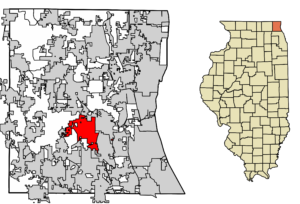
Ordinance
Passed: October 28, 2024
This ordinance (O-24-10-52) declares public camping a nuisance in the Village of Mundelein and prohibits sleeping or establishing campsites on public property, rights-of-way, entrances, bridges, parks, benches, and in vehicles parked overnight, except where expressly authorized, during emergencies, or for approved special events.
The ordinance cites “City of Grants Pass, Oregon v. Johnson, 603 U.S., 144 S. Ct. 2202 (2024), where the United States Supreme Court held that the criminalization of “public camping,” as defined in the City of Grants Pass’s ordinance, did not unconstitutionally infringe on the Eighth Amendment rights of homeless and otherwise un-housed persons.”
From the ordinance:
“The Village of Mundelein President and Board of Trustees believe that it is appropriate, necessary and in the best interests of the Village of Mundelein and its residents, that the Village of Mundelein implement a Public Camping Prohibition and related enforcement mechanisms, to address the myriad public concerns that public camping creates.”
The city’s definition of public camping includes sleeping in a vehicle overnight.
Penalties start at $75 and go up to $750 and may include incarceration. Substitutions for a monetary penalty, when consented to by the city, may include cleaning of public ways and buildings.
Enforcement Records Found via FOIA request
Since passing an anti-camping ban in November 2024, Belleville has chosen to punish people experiencing homelessness for engaging in life-sustaining activities rather than ensuring they have access to shelter or services. For example, an unhoused woman who went to the Belleville police station to report stolen property while sheltering outdoors left with a written warning for public camping. In another instance, an individual asked an officer whether there were any shelters in Belleville and was told there were none and that they could not sleep in public “at all.” This ordinance does nothing to address street homelessness but instead creates additional hardship for individuals already facing dire circumstances.
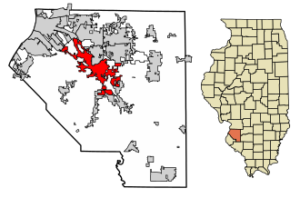
Ordinance
Passed: November 4, 2024
This ordinance (130.21 PUBLIC CAMPING) declares public camping a nuisance in Belleville and states, “regulation of public camping necessary to promote public health.” The ordinance prohibits sleeping or establishing campsites on public property, rights-of-way, entrances, bridges, parks, benches, and in vehicles parked overnight, except where expressly authorized, during emergencies, or for approved special events.
Penalties start at $75 and go up to $750 and may include incarceration. Substitutions for a monetary penalty, when consented to by the city, may include cleaning of public ways and buildings.
Enforcement Records Found via FOIA request
Although East Peoria enacted an anti-camping ban in September 2024, only one citation has been issued as of December 2025. That citation for sleeping on a public bench was issued by an officer who had previous encounters with the individual, presumably unrelated to their homelessness. Records obtained by CCH indicate that the East Peoria Police Department “does not have any specific policies, practices, procedures, rules, regulations, orders, training materials, or instructions to provide” pertaining to enforcement of the ordinance.
There is reason to believe that East Peoria has prioritized connecting people experiencing homelessness to appropriate services and resources, rather than resorting to punitive measures. This underscores the choice that local governments have: use anti-camping ordinances to criminalize people for existing outdoors or focus on solutions that could actually resolve homelessness.
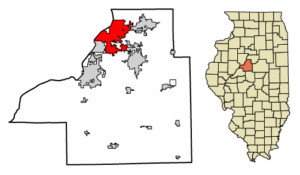
Unauthorized Camping Policy – City of Peoria
Passed: November 19, 2024
The City of Peoria’s camping policy prohibits camping and storing personal property on public property. The city requires notice that gives occupants 48 hours to relocate and access social services before cleanup occurs. If occupants remain, escalating citations may be issued within a 180-day period, personal property is removed and stored for 30 days for possible reclaiming, hazardous or perishable items are disposed of, and permanent signs may be installed at cleared sites to allow immediate enforcement within 50 feet after a 10-day notice period.
Penalties:
- First Violation (within 180 days): $50 – $100
- Second Violation (within 180 days): $100 – $250
- Third Violation (within 180 days): $250- $750 and possible incarceration