
Nonprofits are pushing forward with proactive measures to provide health care and basic services
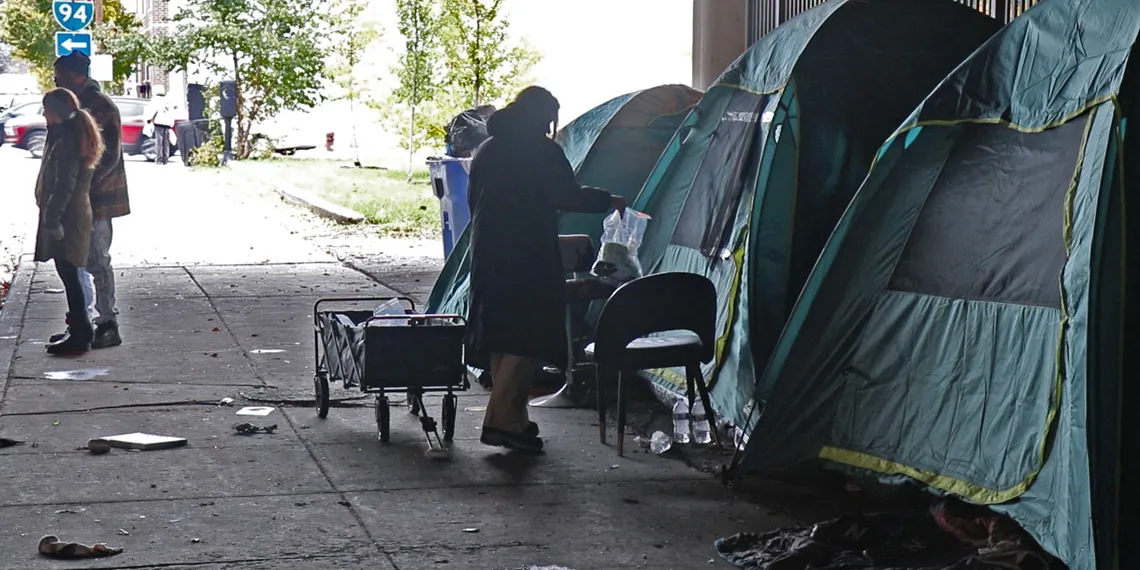
A volunteer with Street Samaritans hands out a care package to a person camping underneath a bridge in November in the Chicago area. | Medill Illinois News Bureau by Jacques Abou-Rizk
CHICAGO — Homeless people are much more likely to face emergency room visits, hospitalizations and premature death than the general population, and state officials are struggling to stem the crisis, according to a new report by the Illinois Department of Public Health.
Underlying these efforts to end homelessness is the Home Illinois Plan, the overarching multiagency strategy to address housing instability, in which the Housing First model is a core pillar. The model emphasizes that homelessness is not driven by individual shortcomings but by housing costs and systemic inequities.
From the article:
While Pritzker’s administration has been in tune with supporting homelessness and housing services, budget cuts over the last two years have dampened efforts to address the affordable housing crisis, said Niya Kelly, director of state legislative policy, equity and transformation at the Chicago Coalition to End Homelessness.
“As we are seeing rents get higher and the price of items continue to grow and wages stay stagnant, we know that we’re going to see more people who are unstably housed,” Kelly said. “We want the governor’s office and the General Assembly to say, ‘We see these folks, and we’re going to make sure that we’re providing all the services that we can, not only get them housed, but get them the services that they need in order to stay housed.’”