
Thomas Wilkins remembers wasting away.
A homeless man in his late 30s, Wilkins was managing a chronic illness and a drug addiction, while unable to access his necessary HIV medication. He said he eventually got diagnosed with wasting syndrome. He would get some help here and there — $80 a month from a health and housing program was a vital asset. But it wasn’t enough to alter his situation, he said.
“I was living in the park, didn’t have [anywhere] to take my meds, couldn’t feed myself,” he said.
That changed when he was accepted into a permanent supportive housing program through AIDS Foundation Chicago.
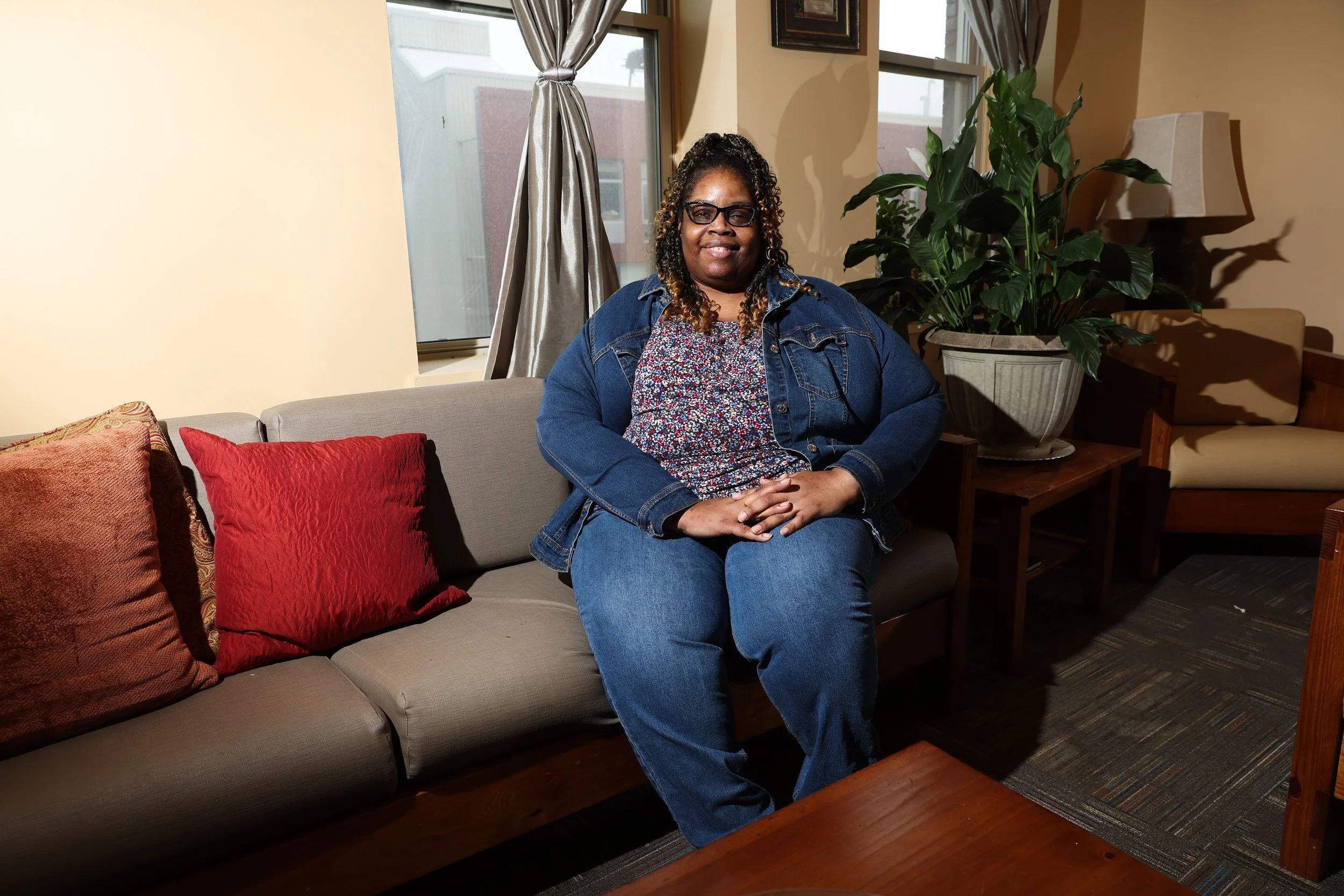
Mildred Jenkins poses for a portrait at Deborah’s Place in Chicago’s Old Town neighborhood on Thursday, April 16, 2026. | Talia Sprague/for City Bureau
From the article:
“There’s a credible threat to the funding that states and cities have relied on for decades,” said Doug Schenkelberg, executive director of the Chicago Coalition to End Homelessness. “That funding has never been adequate. It’s never been enough to meet demand, but it has been reliable.”
And Chicago needs those dollars to meet a steadily high number of people without reliable housing.