
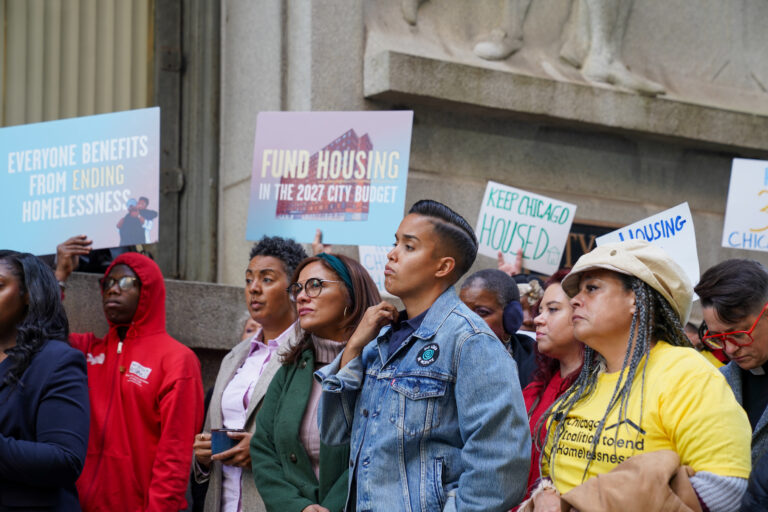
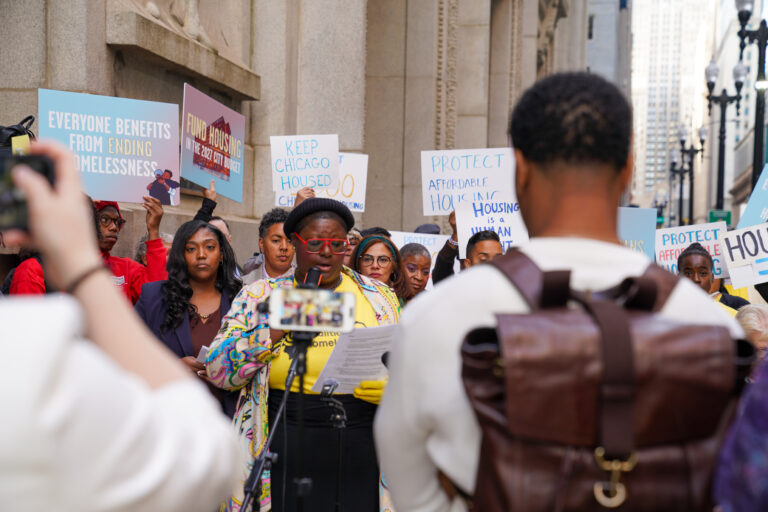
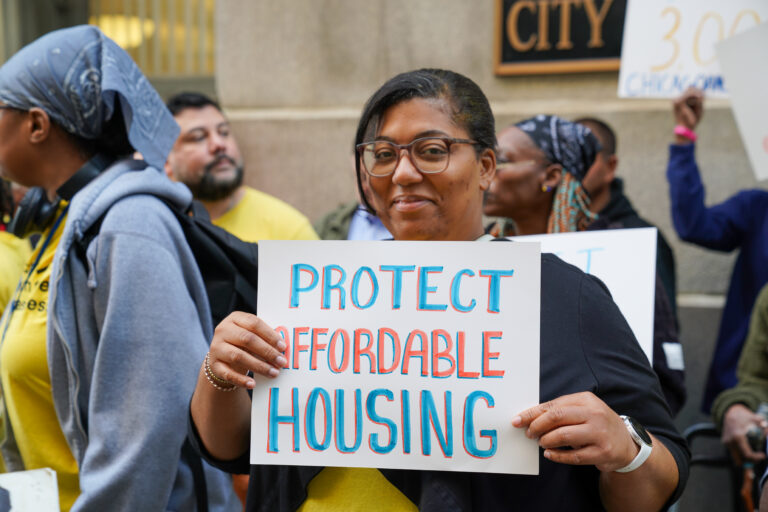
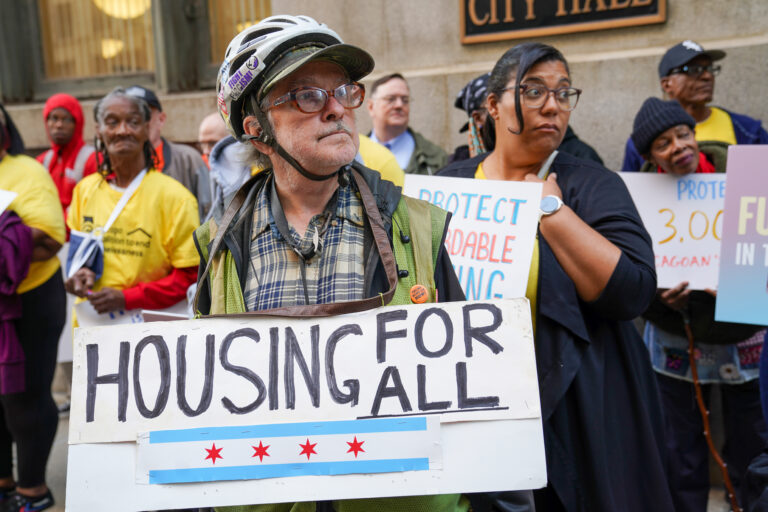
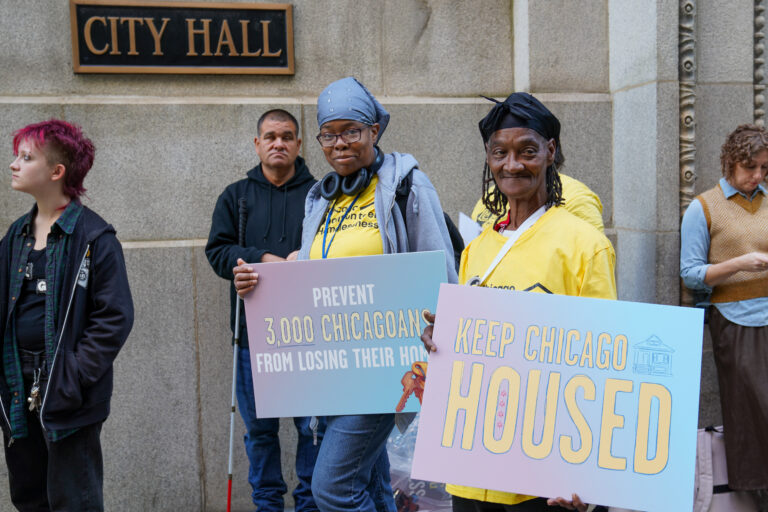
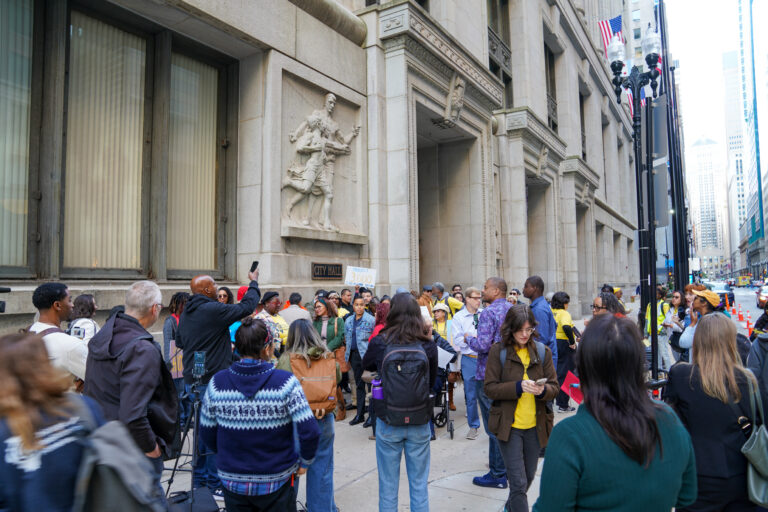
CHICAGO, IL — More than 60 advocates, alderpeople, and housing and service providers gathered outside City Hall this morning to call on city leaders to include $30 million in the FY2027 city budget to prevent 3,000 Chicagoans from losing their homes amid drastic federal funding cuts and unexpected shortfalls in local housing programs.
The Keep Chicago Housed campaign is calling on city leaders to include a combined $30 million in next year’s city budget, including:
- $15 million to fill gaps created by changes to the U.S. Department of Housing and Urban Development’s (HUD) federal homeless funding, protecting critical housing and support services for people who have exited homelessness.
- $13 million for the Chicago Low-Income Housing Trust Fund (CLIHTF) to prevent currently housed low-income households from losing their homes.
- $2 million for the Flexible Housing Pool (FHP) to help households exiting homelessness find and maintain housing.
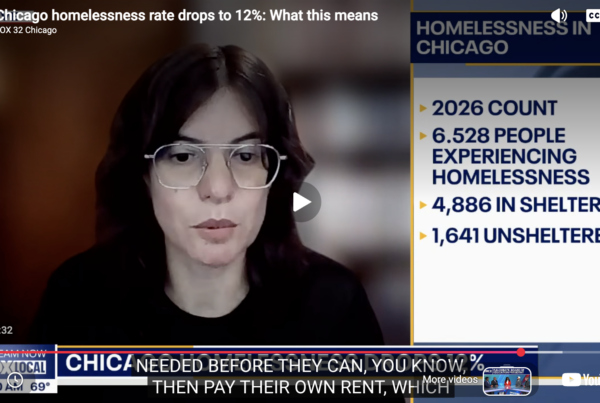
The most recent estimate from the Chicago Coalition to End Homelessness found that more than 58,000 people experienced homelessness in Chicago in 2024, including people sleeping in tents, on couches, and in shelters. There are already extremely limited options available for people experiencing homelessness to find long-term stability. The loss of federally funded housing and reduced capacity of local programs will only make the problem worse.
Meanwhile, Chicago has seen a 9.5% increase in average rent over the past three years—the largest increase among major American cities —according to real estate data provider CoStar. Rising rents make it even more difficult for low-income Chicagoans to afford housing. A 2020 study from the U.S. Government Accountability Office found that a $100 increase in median rent is associated with a 9% increase in homelessness.
Federal funding changes threaten permanent housing
The Trump administration has repeatedly sought to shift federal homelessness funding away from Permanent Supportive Housing in favor of short-term assistance, transitional housing, and mandatory treatment.
“As the federal government shifts funding from long-term effective solutions to shorter term less successful ones, our 222 residents of HUD-funded programs could face the disastrous possibility of a return to homelessness,” said Kathy Booton Wilson, CEO of Deborah’s Place, which provides housing to women who have experienced homelessness. “The impact on our community is just as damaging.”
Healthy Futures, a program operated by the AIDS Foundation and the Center for Housing and Health, currently provides permanent supportive housing to116 people funded by HUD. Due to changes to HUD policy, the program will be converted from permanent housing to transitional housing. People currently housed through the program will face the loss of long-term housing stability, while new program participants will be limited to 24 months of support.
“These are not numbers on a spreadsheet,” said Brittany Johnson, Senior Program Manager at the Center for Housing and Health. “These are people who have found stability after years of uncertainty.”
Chicago’s homeless response system is already at capacity. Current waiting times to access the city’s emergency shelter system range from days to weeks, sometimes months. Waitlists for permanent housing are even longer, with individuals and families waiting years to find stability. Reducing existing resources will only increase demand for already overwhelmed programs, leaving people experiencing homelessness with few immediate options.
“Permanent supportive housing is crucial to my mental health and wellbeing,” said Joann Bratcher, a permanent supportive housing resident through Thresholds. “Without it I would be on the street again and at risk of suffering a mental health relapse.”
Local housing programs also face funding shortfalls
The Chicago Low-Income Housing Trust Fund (CLIHTF) provides rental assistance to households earning at or below 30% of Area Median Income (AMI), helping seniors, people with disabilities, working families, veterans, and other vulnerable residents afford their homes and avoid homelessness. The Trust Fund currently serves 2,578 households.
The program has experienced significant declines in several of its traditional revenue sources. Without additional funding in this year’s city budget, up to 1,378 low-income Chicago households could face displacement, housing instability, or homelessness.
“Once an affordable unit is lost, it is difficult and expensive to replace, and it’s almost impossible to find new affordable housing,” said Melodie Kipta, a tenant living in Trust Fund supported housing. “I need my housing.”
The Flexible Housing Pool has also demonstrated the value of investing in permanent housing and supportive services. The program serves individuals and households facing significant barriers to housing, including people with serious physical or mental health needs and people returning from jail or prison, by combining rental assistance with intensive supportive services.
Since 2019, FHP has housed 1,750 people. Ninety-two percent of people housed through FHP remain housed for at least 12 months. The program has also contributed to significant reductions in emergency room visits, hospital inpatient stays, and EMS responses, reducing crisis system costs by $11 million annually.
“When we invest in housing, we are not simply spending money,” Johnson said. “We are reducing costs. We are making smarter investments while achieving better outcomes.”
ABOUT THE KEEP CHICAGO HOUSED CAMPAIGN
The Keep Chicago Housed campaign is backed by a coalition of respected community and advocacy organizations dedicated to ensuring every Chicagoan has a safe place to call home: Chicago Coalition to End Homelessness, Communities United, Jewish Council on Urban Affairs, ONE Northside, SEIU Healthcare, and Southside Together.
The campaign is part of the coalition’s broader effort to urge city leaders to invest in solutions at the scale necessary to effectively address homelessness.
Media Contact:
Claire Sloss
Chicago Coalition to End Homelessness
(937) 674-2882 (call/text) | csloss@chicagohomeless.org

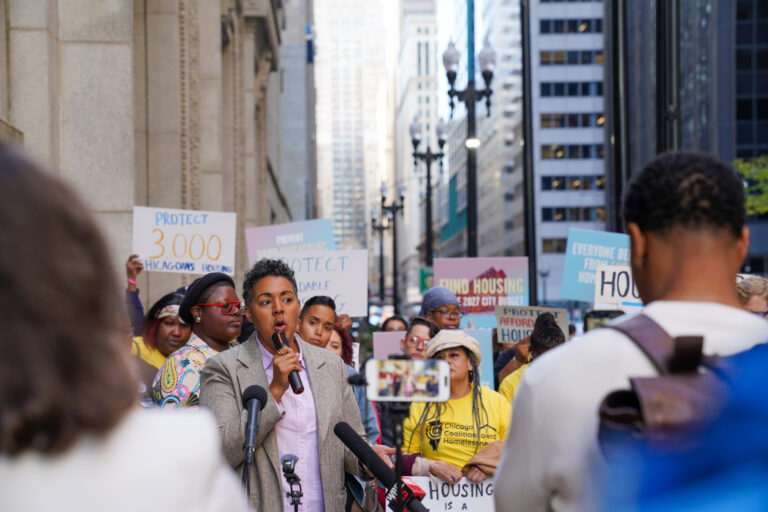
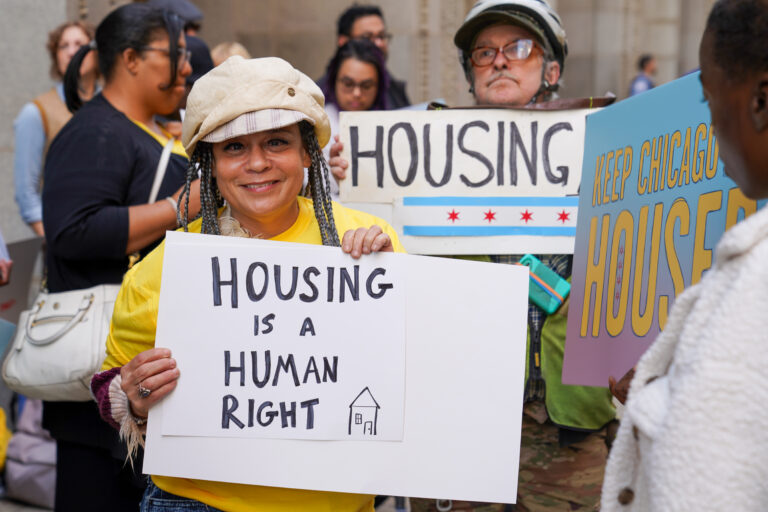
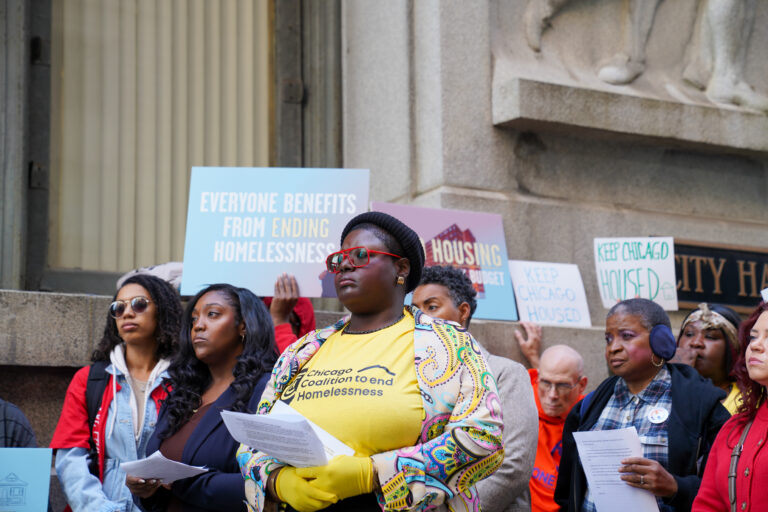
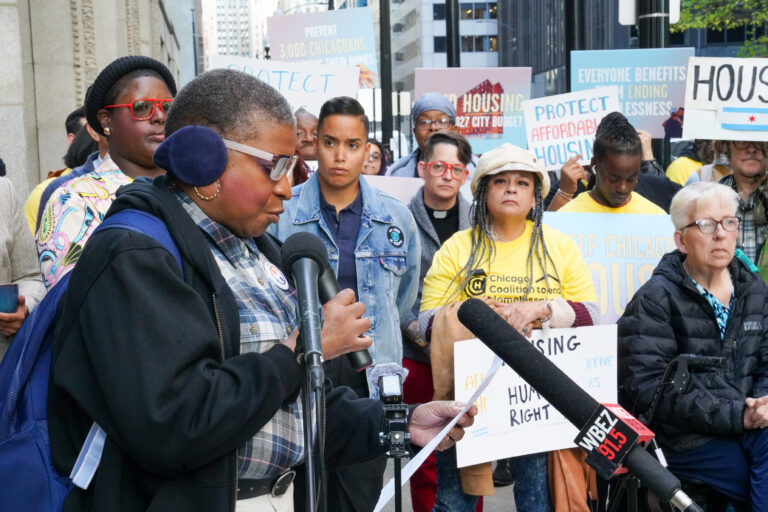
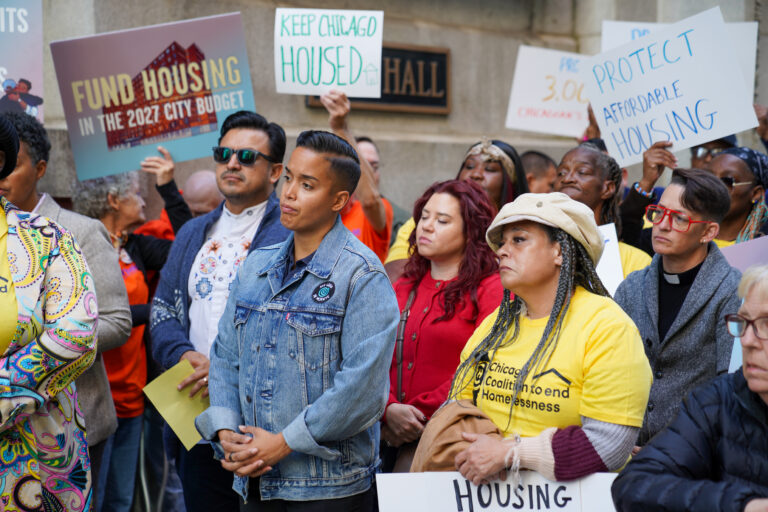
Keep Chicago Housed Press Conference video
Thursday, October 8, 2026 | 9 am | City Hall